
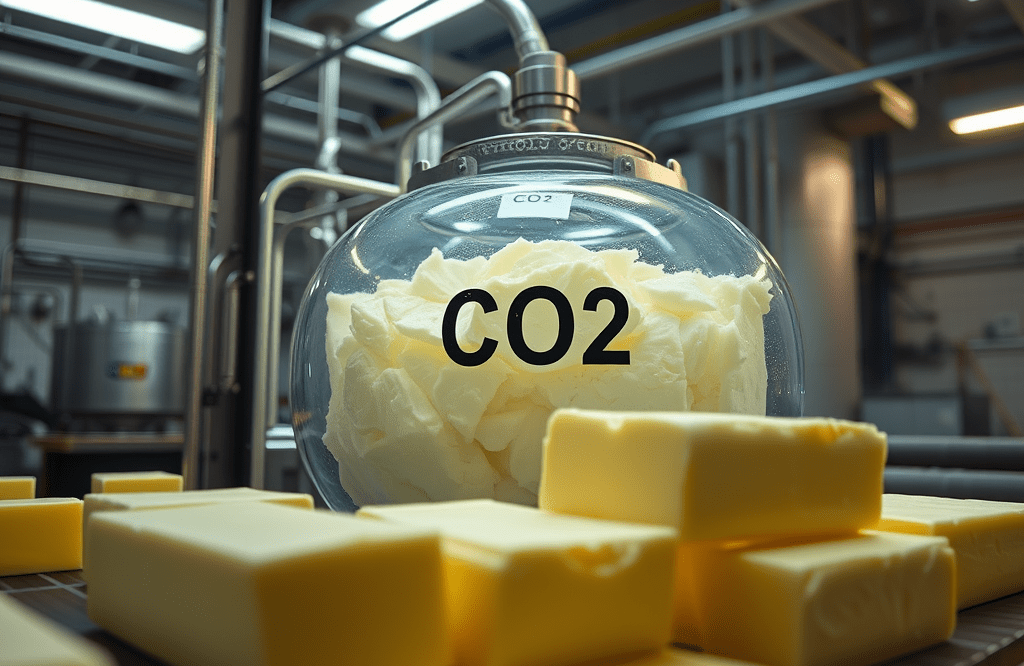
Imagine spreading butter on your toast. This butter wasn’t made by cows. Instead, it was created from carbon dioxide pulled straight out of the atmosphere. Sounds like science fiction? It’s not. A groundbreaking innovation in sustainable food production is turning CO₂ into delicious, creamy butter. This innovation could revolutionize the way we think about dairy.
How on Earth (or Air) Is This Possible?
This futuristic butter originates from companies like Solein (by Solar Foods) and Butterfat (by Savor). They are pioneering carbon-negative fats. Here’s how it works:
- Capturing CO₂ – Using direct air capture (DAC) technology, carbon dioxide is extracted from the atmosphere.
- Fermentation Magic – Microbes, similar to those used in brewing, consume the CO₂. They also consume hydrogen and oxygen. This process converts these elements into fat molecules.
- Refining into Butter – The resulting lipids are processed into rich, creamy butter. It’s chemically identical to the real thing, just without the cows!
Why This Matters: A Greener, Kinder Butter
Traditional dairy production is a major contributor to:
- Greenhouse gas emissions (cows produce methane, a potent climate-warming gas).
- Deforestation (vast lands are cleared for cattle grazing).
- Water usage (dairy farming is incredibly water-intensive).
But CO₂-made butter flips the script by:
✔ Using 1,000x less land than conventional dairy.
✔ Producing near-zero emissions (or even being carbon-negative).
✔ Avoiding animal agriculture entirely—making it vegan-friendly.
Does It Actually Taste Like Butter?
Early taste testers say yes! The lab-grown fat has the same mouthfeel, richness, and versatility as traditional butter. It browns, melts, and bakes just like the real deal—because chemically, it is the real deal, just made differently.
The Bigger Picture: A Food Revolution?
If this technology scales up, it could:
- Reduce reliance on industrial animal farming.
- Help fight climate change by repurposing CO₂.
- Make sustainable food more accessible.
Final Thought: Would You Try Air-Based Butter?
The idea of eating butter made from pollution might sound wild. But if it tastes the same and saves the planet, why not? The future of food is getting smarter—and cleaner—by the day.
What do you think? Would you spread CO₂ butter on your toast? Let’s discuss in the comments!
 Science Sansar