
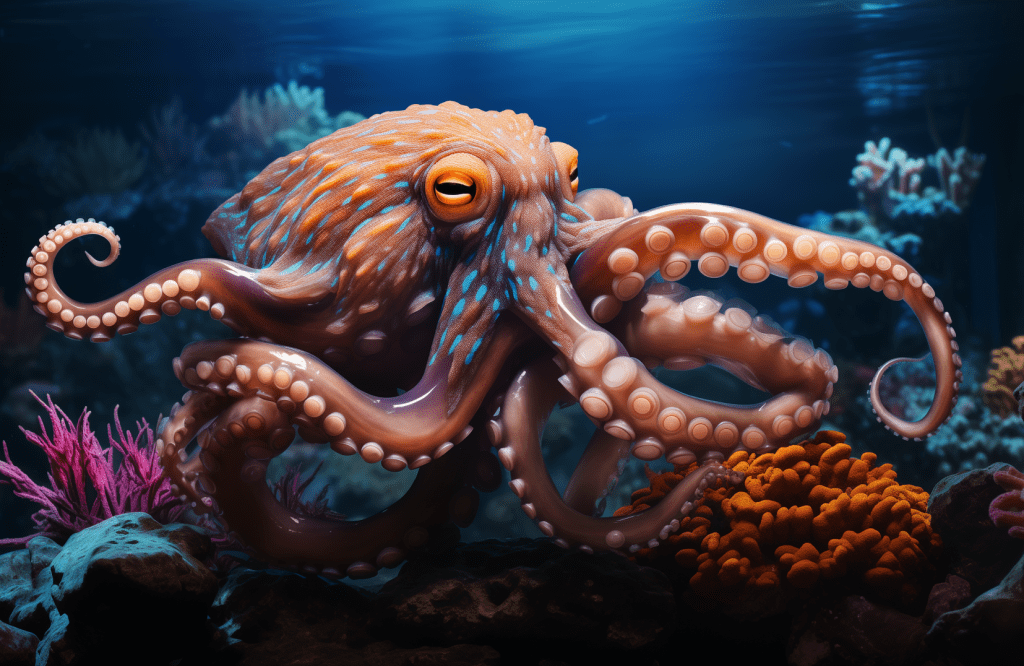
Octopuses are remarkable creatures, renowned for their intelligence, camouflage, and incredible regenerative abilities. They can regrow severed arms. These arms come complete with fully functional muscles and nerves. They also include the complex neural circuits necessary for movement and sensation. This natural ability to regenerate tissue has sparked interest among scientists. Medical researchers are excited by the possibility of applying these biological mechanisms to human medicine.
Understanding Octopus Regeneration
The regenerative process in octopuses involves a combination of cellular regrowth, differentiation, and patterning. After an arm is lost, their bodies start a complex healing response. This response prevents infection and stimulates the growth of new tissues. Over weeks, the arm gradually regenerates to its full size. It regains functionality, guided by specific signaling molecules, stem cells, and genetic pathways.
Crucially, octopus regeneration avoids the formation of scar tissue—a common impediment in human healing. Instead, their bodies reprogram existing cells and activate latent stem cells to recreate the lost structure precisely. This capacity has become a focal point for biologists seeking to unlock its secrets.
Potential Applications in Human Treatment
The mechanisms underlying octopus regeneration could revolutionize treatments for injuries and degenerative conditions in humans. Here are a few areas where this research holds promise:
- Limb Regeneration: Developing techniques to regrow human limbs using insights from octopus biology could dramatically improve the lives of amputees. Humans can heal minor wounds. However, regrowing complex structures like limbs remains elusive.
- Scar-Free Healing: The ability to heal wounds without scarring would benefit burn victims, surgery patients, and those with chronic wounds. Understanding how octopuses avoid fibrosis during regeneration could lead to breakthroughs in improving human tissue repair.
- Nerve Regeneration: Damage to the nervous system is notoriously difficult to repair. This includes spinal cord injuries and peripheral nerve damage. Octopus nerve regeneration could inspire new strategies to restore nerve function and improve recovery for neurological conditions.
- Organ Regrowth: Beyond limbs, the principles of regeneration might extend to repairing damaged organs. They could even offer a way to regrow organs. This provides an alternative to organ transplants.
Challenges and Ethical Considerations
While the potential applications are exciting, significant challenges remain. The biological processes in humans are vastly different from those in octopuses. Translating these findings into practical therapies will require advanced genetic and biomedical engineering. Additionally, ethical considerations surrounding gene editing require careful scrutiny. Stem cell use and regenerative medicine also need careful scrutiny to ensure responsible development and application.
Current Research Efforts
Scientists are already making strides in understanding octopus regeneration. Studies focus on identifying key genes, proteins, and cellular behaviors involved in their regenerative processes. By mapping these pathways, researchers aim to replicate or adapt them for human benefit. Advances in CRISPR technology, stem cell research, and biomaterials are accelerating this progress.
Conclusion
Octopus regeneration represents a fascinating frontier in biomedical research. There is still much to learn. However, the potential to harness this natural ability for human medicine could transform the way we approach healing and recovery. The octopus can regenerate limbs. It also repairs nerves and organs. These lessons may one day help humans overcome injuries. They could help with diseases once considered permanent.
For a future where regenerative medicine becomes a reality, nature’s master regenerator—the octopus—may hold the key.
 Science Sansar